Most breathing exercises for sleep fail for one reason: they ask the body to relax before they give it a signal it trusts. The long exhale is that signal — here is how I use it before bed and at 3 a.m.
If I could hand every tired person one tool, it would not be a supplement or an app. It would be a slower out-breath. Sleep is not something you can force — the harder you chase it, the further it backs away — but it is something you can invite, and the exhale is the most reliable invitation I know.
This post is about breathing exercises for sleep that work with your physiology rather than against it: why the exhale is the lever, a ten-minute sequence you can do in bed, what to do when you are wide awake at 3 a.m., and a few bedroom habits that make all of it easier. If sleep has been a long struggle, please know that breath training complements care from your provider; it does not replace it.
Why the exhale is the wind-down lever
Your nervous system has two broad gears: the one that gets you going and the one that lets you rest and repair. You cannot simply decide to shift into rest gear — but you can send the body the signals it associates with rest, and it will shift on its own. The exhale is one of those signals.
Here is the plain version. When you breathe in, the heart speeds up slightly. When you breathe out, it slows. Stretch the out-breath and you spend more of each minute on the slowing side, and the body reads that as “nothing is chasing us.” Muscles soften, the mind stops scanning, and sleep has somewhere to land.
The opposite is also true. Fast, high, mouth breathing — the kind many of us do all day without noticing — keeps a low hum of alertness running. If you have ever wondered why you feel exhausted and wired at the same time, I wrote about that pattern in why stress leads to fatigue. The good news is that the breath that got you wound up is the same breath that can wind you down.
Breathing exercises for sleep: a ten-minute pre-bed sequence
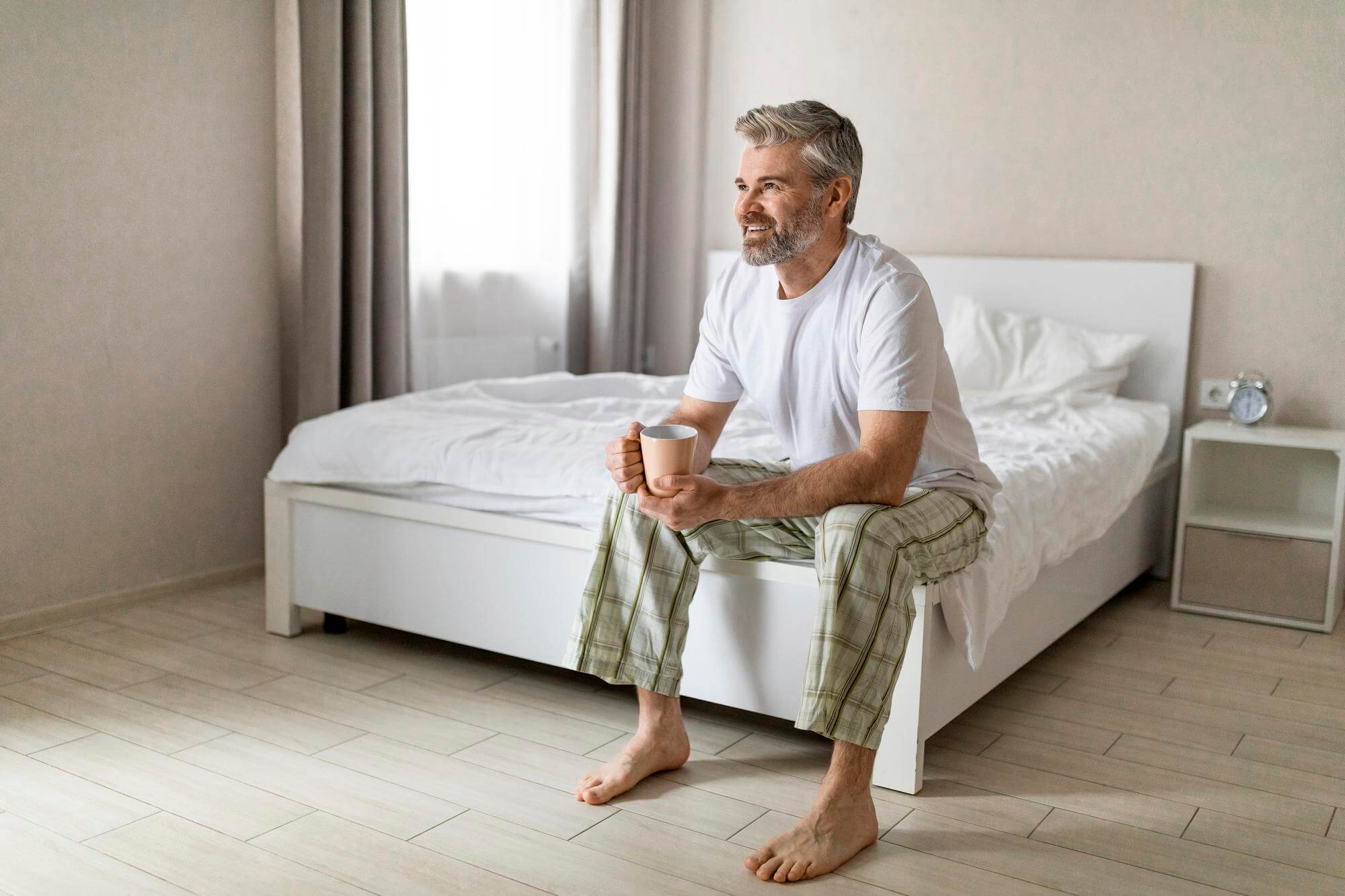
Of all the breathing exercises for sleep I have tried with clients, this is the shape I teach most often. It is deliberately simple; you will not have to remember much when you are tired. Lights low, phone out of reach, lying on your back or your side.
- Minute one — just notice. Put a hand on your belly. Do not change anything yet. Where is the breath going, and how fast is it? Noticing is already a step toward slowing.
- Minutes two to four — lower it. Breathe in through the nose and let the belly rise under your hand before the chest moves. Keep the inhale small and quiet. Let the exhale be soft and a little longer than the inhale, with no numbers yet.
- Minutes five to eight — lengthen it. Now add a gentle count: in for three, out for six, through the nose. If six feels like a stretch, use in for three and out for five. The exhale should feel like setting something down, not squeezing something out.
- Minutes nine and ten — let go of the count. Drop the numbers and keep the shape: low, slow, nose, longer out. Let the breath get quieter and smaller on its own. If you drift off before you finish, that is the point.
On each exhale, let one part of you get heavier: the jaw, then the shoulders, then the hands, then the legs. By the fourth or fifth breath there is usually nothing left to hold up. Do not check whether it is working — checking is a form of alertness. Just keep breathing out.
What to do at 3 a.m.
Waking in the small hours is common, and the frustration about being awake often does more damage than the waking itself. The body wakes, the mind notices the clock, and the alarm starts: “I have to be up in four hours.” Now you are not just awake — you are on duty.
So the first job at 3 a.m. is not to fall asleep. It is to stop the escalation. Here is my sequence:
- Do not look at the time. The number only gives the mind something to calculate.
- Mouth closed, breath low. Find the belly under your hand again. Nasal breathing slows the rate on its own.
- Exhale long, and count the exhales only. Breathe in easily and count each out-breath from one to ten, then start over. If you lose your place, that is fine — it means the mind is letting go.
- Drop the goal. Tell yourself the truth: “Resting is enough. My body is repairing even if I am awake.” Rest with a slow breath is genuinely restorative, and sleep usually returns once it is no longer being demanded.
These are breathing exercises for sleep in the sense that they clear the path — but they are really breathing exercises for not fighting, which turns out to be the same thing.
Bedroom habits that support the breath
Even the best breathing exercises for sleep cannot out-work a bedroom that is keeping you alert. A few small things make a surprising difference.
- Breathe through your nose at night. If you wake with a dry mouth, you are probably mouth breathing while you sleep, which keeps breathing fast and shallow. Practicing nasal breathing during the day is the gentlest way to carry it into the night. If snoring or gasping is part of the picture, talk with your provider — that deserves a proper look.
- Cool, dark, quiet. A slightly cool room and real darkness both tell the body it is night. A warm, bright room tells it the opposite, no matter how slowly you breathe.
- Put the phone somewhere else. Scrolling is fast, bright, and emotionally unpredictable — the exact mix that keeps the nervous system scanning. Let the last ten minutes of your day belong to your breath instead.
- Keep the wind-down boring and the same. The body loves a pattern. When the same few steps happen every night, the exhale starts to work faster, because the body already knows where this is going.
Practice it when you do not need it
One honest note: breathing exercises for sleep work best at night when your body already recognizes them from the day. Two or three minutes of slow nasal breathing in the afternoon — at a red light, before a meeting, while the kettle boils — teaches the pattern when the stakes are low. Then at bedtime you are not learning a skill; you are returning to one.
That is why I build these sequences into the guided practices on the practices page, and why breathing exercises for sleep are part of nearly every plan I make with clients. Sleep is not a switch. It is a slope, and the exhale is how you walk down it.
If better sleep keeps slipping out of reach, book a free consultation and we will shape a wind-down breath practice that fits your evenings.